

Lose Weight Now, Ask Me How
On diet culture, equating our size with self-worth, and a plea to stop the insanity

Like a lot of Gen-X women, I went on my first diet around the age of thirteen — and I’ve been in a battle with my body ever since. I’ve bounced between 10 lbs under “goal” (okay, maybe only five, and that happened like one time in the 90s) and 70 lbs over (the day I gave birth in 2005). Mostly, I’ve been gaining and losing the same 30-ish pounds for the better part of my adult life, using methods from Weight Watchers to Whole30 to Intermittent Fasting to a very brief flirtation with Zepbound that made me miserable.
But I think I’m finally done — or at least I’m actively working on radical self-acceptance instead of attempting yet another weight-loss plan. Not that the combined multi-trillion-dollar health, wellness, diet, and beauty industrial complex makes it easy to embrace my bigger body.
One thing that does help, at least a bit: My mother is no longer alive to add to the calorie-counting, fat-phobic chorus.
That said, I can still hear her in my head, coaxing me to finish the job. Because striving to make our 5-foot-8-inch frames sleeker and smaller was one of the main Mommy-and-Me activities we regularly did together. And although she never got to our mutually agreed upon “goal” weight (again, that would be the number neither of us hit more than once as grown-ass women with grown asses), I still have time.
I’m just not sure that’s how I want to spend it. Or my money, for that matter.
The Replacements
It all started with Jazzercise in the early 80s. I can still remember how we would pet our imaginary horses in the local dance studio before pretending to mount them and start galloping to the heart-pumping sounds of the theme song from “Dallas” and the way we would do bouncy lunges to “Another One Bites the Dust.”
Honestly, I loved going to those classes and moving my body — until it started to feel more like a means to a weight-loss end, alongside the 40-plus years of restrictive eating that followed.
First came Shaklee. My mom was super excited to show me how it worked, and how skinny it would make us. She stacked the boxes in one of the kitchen cupboards, replacing the Oreos and other snack foods she’d banished like butt-dimpling demons from hell, then whipped up a chocolate shake in the blender.
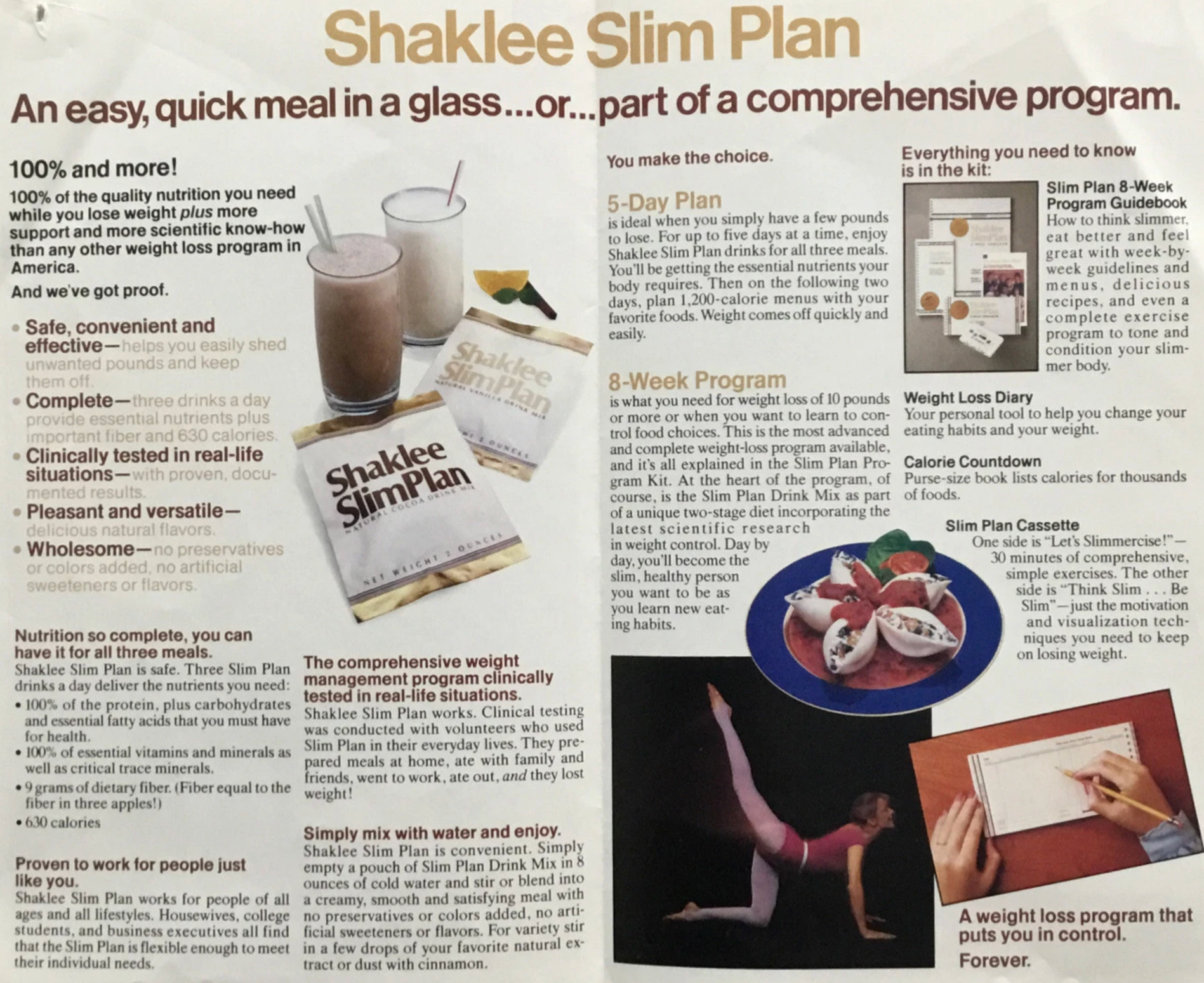
Thus began the meal replacement era, which also included OptiFast, SlimFast, The Cambridge Diet, The Grapefruit Diet, and The Cabbage Soup Diet.
When I was in high school, my mom returned to Weight Watchers, which she had previously done shortly after I was born (because we all know baby weight is evil and must be removed immediately). After signing us both up, she slapped a “Nothing Tastes as Good as Skinny Feels” magnet on our refrigerator and we began measuring everything we consumed on a little plastic food scale. Later, after my first year of college, she encouraged me to drop my “Freshman 15” by accompanying her to the gym … and Jenny Craig.
Then the 90s arrived and, with them, Fen-Phen. I wasn’t even overweight at that point but any time I visited my mom, she would look me over and ask if I’d put on a few pounds. Plus, heroin chic was the aesthetic du jour, and a bunch of my friends and coworkers were morphing into emaciated versions of their former selves thanks to the drugs. So, my mom and I both started taking them — or, in my case, I just took the one that sped me up, using it as a party drug as well as my ticket to Tiny Town.
Culture Club
No matter how much weight I lost, it was never enough. Because diet culture — and all its prey, my otherwise intelligent mother included — kept insisting we still had work to do. As explained in this article and plenty of other analyses, it’s a culture with a long history of racism and misogyny. One that worships thinness and equates smaller bodies with health and moral virtue, intent upon shrinking women and keeping us in our place.
And it started working on my mom way back in 1951.
Here’s one story she wrote in a memoir class she took a few years before she died, about a shopping trip she took with her mother: “Mum and I had to go to Oxford Street in London, to a big shop to alter my school uniform. I stood obediently while I was measured. ‘Large for her age, isn’t she?’ the saleswoman said, as if I was an inanimate object.”
She was 10 years old.
At that point, my mother was simply taller than her peers, with bigger feet. But, as she wrote — and often mentioned throughout her life — she became known at her all-girls boarding school as “The Whopper.” She carried that with her for the rest of her life, desperately trying to fit into a world that told her she was too much, and never enough.
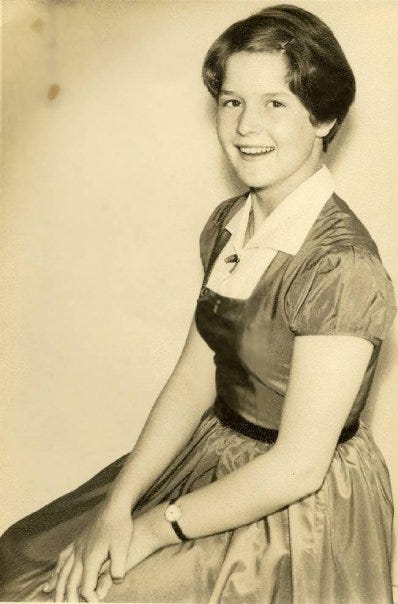
One thing that really sucks is that when I was a kid, I never thought of her as anything but beautiful. I have vivid memories of sitting next to her at the vanity mirror while she tied back her thick brown hair with a scarf before heading out in her little white tennis outfit, or a strappy 70s dress she sewed herself. Watching her “put on her face,” I thought she was the most glamorous person I’d ever seen. I wanted to be just like her.
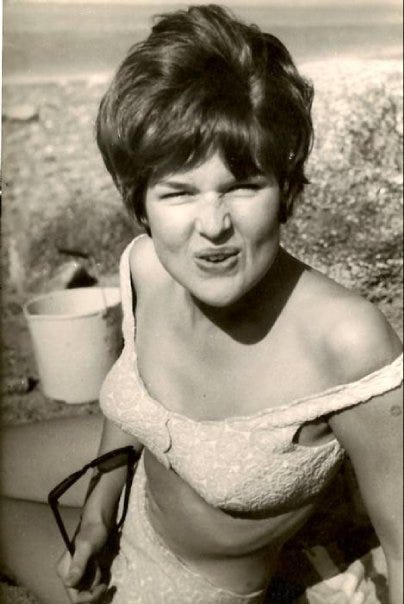
Which is, I suppose, one of her lasting legacies — because being like her also meant, at some point, despising my body. And while it seemed to have started at a young age for us both, I really began noticing it when my mom was in her forties. Which would have been around the time she was approaching menopause, and I was nearing menstruation.
It makes me wonder: Is this what happens with most mothers and daughters? Are we eternally going through parallel coming-of-ages, passing the self-loathing down from one generation to the next?
Because it wasn’t just me and my mom hating our bodies back then. I mean, I totally remember the conversations friends and I had while sitting around the lunch tables at school, nibbling on air-popped popcorn or skipping meals altogether while despairing over the size of this body part or that. For many of us, disordered eating and body-shaming — ourselves and others — just became a natural part of our personalities.
And, unfortunately, a lot of us have carried those conversations right into adulthood, insisting that we’re not judging anybody; we’re simply expressing “concern” for the health and wellbeing of our kids, or celebrities (who are always either too fat or too thin), or each other.
I’m sorry but I’m not buying it — especially because I spent most of my career fucking peddling it.
Talking Heads
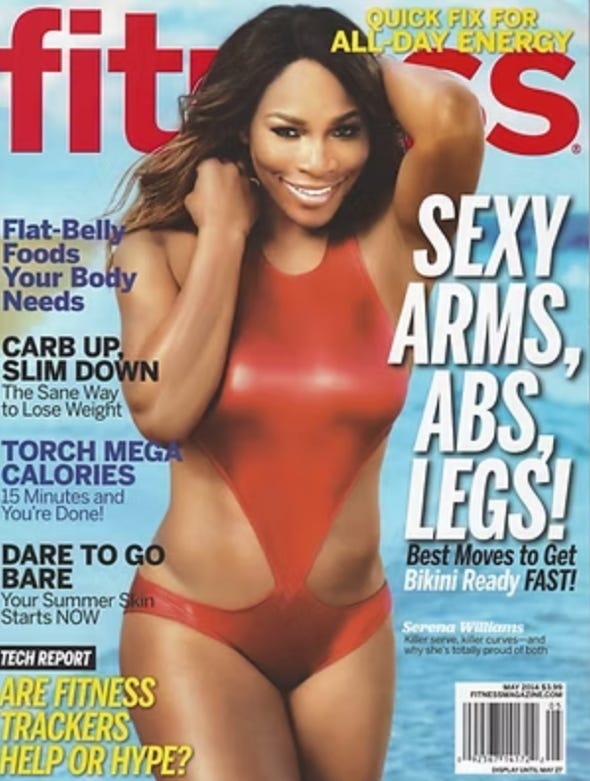
Yup. Here’s where it gets even uglier (mea culpa times a million): I spent decades professionally pushing the weight-loss narrative, mostly in magazines — from Fitness to Shape to American Baby. I sat in the editorial meetings and wrote the articles and cover lines, from Brand New Year, Hot New Bod! to Bikini Ready in 8 Weeks! to Is Your Baby Too Big? (Uh huh, that was the headline.)
On several occasions, I even took enthusiastic readers to health spas for makeover stories. One poor woman was noticeably distressed when she didn’t fit into some of the clothes the fashion editor brought. Another was traumatized and barely pictured in an article because she couldn’t hold the workout poses our fitness editor demanded for the photo shoot. Meanwhile, the headlines read “Real Women! Real Results!” — and I was the one who wrote their profiles, making them seem thrilled with the experience and how much we had changed their lives (which I suppose was true? Just not for the better).
Back then, we convinced ourselves we were promoting health and wellbeing while simultaneously selling ads for diet supplements and airbrushing the hell out of every image, not to mention Frankensteining the models together so their heads looked as good as their bodies in the final shot.
The most insidious part? We cited the studies, quoted the experts, reported the science (“backed by research!”). Like, yes, a large waist circumference does correlate with cardiovascular risk. Visceral fat is a health concern. But there is a world of difference between a doctor discussing those things with a patient and a magazine plastering the numbers next to a genetically blessed model.
I’m not telling you this to perform guilt. I’m telling you because the messaging does real damage, and I went along with it.
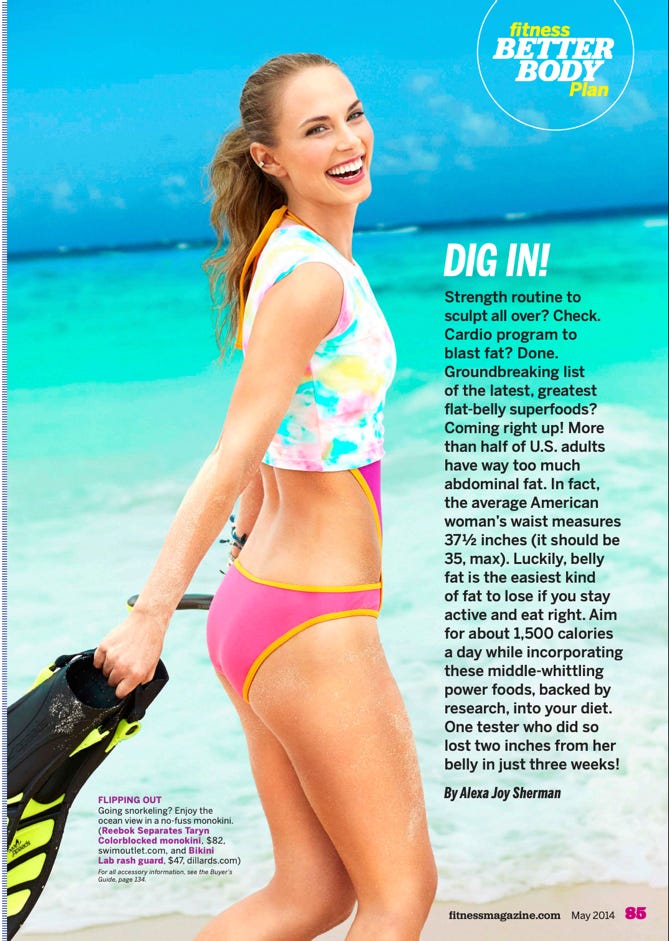
There were times when I tried to push back, and almost convinced myself we really were putting the service in service journalism — especially when I successfully slipped in articles like Too Much of a Good Thing (yes, too much exercise can hurt you) or Scrap the Scale. But the truth was that a little “actually, ease up on yourself” content was great for the brand. It meant we were balanced. It meant we cared about our readers’ wellbeing.
It didn’t slow the conveyor belt down at all. If anything, it only served to speed it up. And today it’s in absolute overdrive.
Rage Against The Machine
Which is why I’m begging, especially my fellow Gen-Xers, to please help me stop the insanity. I mean, we are supposed to be the IDGAF generation — the ones who say, “Fuck you, I won’t do what you tell me!” And I’m not sure it’s the best look to scream that while swimming around in the #SkinnyTok sewer and pretending it’s anything other than shit-water.
To be clear: I’m not saying we need to stop encouraging healthy — and I mean truly healthy — behaviors, like moving and fueling our bodies in ways that help us feel and function our best.
But when are we going to disrupt the dangerous messaging that runs alongside the good stuff? And when are we going to stop disparaging our own bodies, and the bodies of other people (including celebrities), especially in the presence of our children? Because they’re absorbing the negativity and repeating the talking points, primed and ready to keep on keeping on until the end of time.
Which brings me back to a lasting image I have of my own mother, on the day she died from metastatic breast cancer at the age of 68, bald and bloated. There, a few feet from her lifeless body, was a weight chart, which she kept next to a scale in the bedroom for health reasons this time — mostly to track fluid retention related to ascites.
I keep thinking about the final number on that chart and can’t help but wonder, after a full 58 years of hating her body and trying to make it smaller, how she would have felt about it.
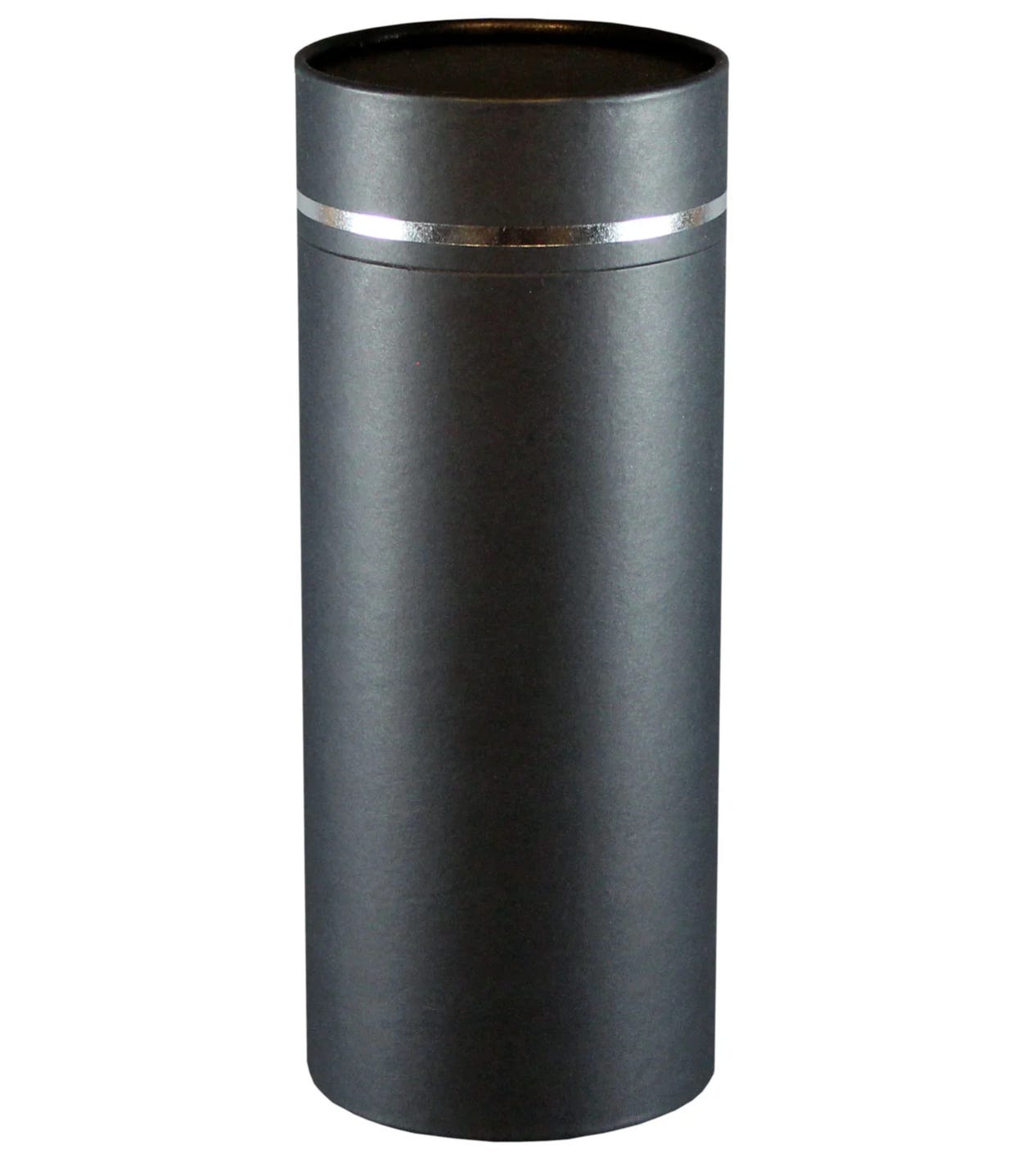
Then I think about the day I picked up her ashes from the funeral home a few weeks later. Scrutinizing the slim cardboard cylinder — oh so sleek — I couldn’t help but laugh when I imagined her somewhere off in the great beyond, bragging to the other matching urns about how she finally fit into that tiny container.
Gah. Right in the feels. I probably have a stack of Shape magazines in basement for my 1994 “New Year, New You!” scrap book 🤢 Excuse me while I burn them all 🔥
I'm X-ennial, but I also started my first diet at 13. I asked my mom if we could go to Weight Watchers together the summer between 7th and 8th grades because I saw a picture of myself that summer and was appalled at how fat I looked. My mom was very overweight most of my life, and she also had been doing diets off and on most of her adult life. She's actually lost a LOT of weight the past 5-8 years due to health issues, and there's a part of me that wonders if she sometimes chooses not to eat because she's enjoying finally being skinny. (I mean, it's also something she can control in her life, while a lot of her health issues are somewhat beyond her control and pretty frustrating.)
Anyway, I often lament how cyclical these things are. My mom was a teenager during the Twiggy era; I was a teenager during the heroin chic era; and my daughter is heading into teenage-hood in this Ozempic era. It's so frustrating to constantly be told that we are never thin enough, and it's heartbreaking to hear my daughter crying to me the very same things I said to my mom about how much she hates her body for being bigger than the other girls at her school. We have the body type that both gains weight easily and gains it mostly in the mid-section, so it takes WORK to keep it off. I'm so jealous of people who don't have to constantly think about food in order just to stay their current weight.
Anyway, my counselor recommend the book _Fat Is a Feminist Issue_ to me, and I was looking forward to reading it. Unfortunately, though I'm sure it was a revolutionary book at its writing in the 1970s, I would not say that it fits today's body positivity movement. The first few chapters that I could make it through very much had the vibe of "Let me explain how becoming fat is your response to the patriarchy, and now that you know that, you can finally become thin!" It wasn't really the vibe I was looking for, so I didn't end up finishing.
I'm trying hard to focus on making my body work for me - making sure my bloodwork is in the right levels and that I will be able to continue to move and do the things I enjoy as I get older. I also want to make sure I'm here for my daughter as long as I can be. I still struggle with hating myself, but I want to love myself. I suppose that's really the first step.