
Am I Turning Into My Mother?
On the once-terrifying prospect of becoming our parents, and why that kinda-sorta-maybe doesn't have to be such a bad thing after all

Reading through my old diaries was part of the inspiration for creating The Gen-X Journals but that’s not the whole story. I’ve also been digging through a folder full of stuff my mom wrote during a memoir workshop she took in 2005, shortly after retiring at the age of 64, and only a few years before her breast cancer mercilessly came back and killed her.
It’s all source material for an intergenerational book I’ve been assembling — more for myself than for publication, at least at this point — and the overlap of certain aspects of our lives is becoming almost eerie.
She’s The One
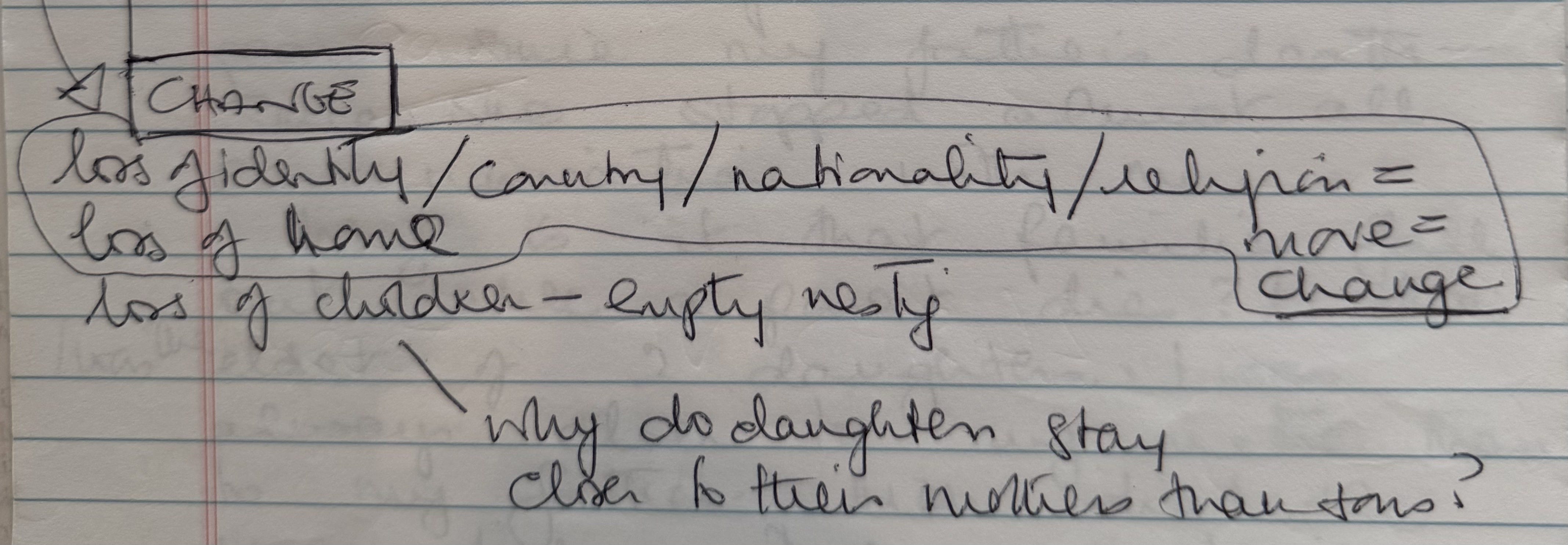
A few weeks ago, I happened upon one page that stopped me cold. It was a story map assignment from my mom’s workshop where she was pondering almost all the same things I’ve been thinking through in recent years, especially with regards to change and loss (in her words, and pretty much mine: “of identity, of career, of home, of children — empty nesting”).
Whenever I’m at my desk — whether it’s to do research, write, check email, or balance the family budget (as she did) — I usually have Spotify playing in the background. Lately it’s the new Harry Styles album on repeat (lmk if you’re obsessed too and maybe we can be best friends?!), but on this particular night it was simply my 645 “liked” songs on shuffle. And, as I stared at my mother’s words, World Party’s “She’s the One” came on.
I nearly jumped out of my skin when the first verse kicked in: I was her, she was me / We were one, we were free
I’m not lying when I say I listened to the track, on repeat, for the rest of the night, the weight of all the words burrowing deeper into my heart. Maybe it was the 5mg gummy, but I became convinced my mom was transmitting a message from the great beyond directly to me, particularly when something — perhaps she — sent me searching online for the song’s origins.
Thanks in large part to Robbie Williams’ more widely known cover, I had always thought it was a love song for a romantic interest. But a few interviews with Karl Wallinger quickly set me straight. Turns out, he wrote it as a tribute to his recently deceased mother, reportedly in about 10 minutes. The opening lines are about the merging that happens between a mother and child.
Holy shit.
I sat there wondering if I too was in the midst of some great mother-daughter merge. And it terrified me. But why?
Mad Woman
Okay, fine. It’s because I hear my mother’s voice instead of mine whenever I’m being impatient or rude, and especially when I almost offer a piece of unwelcome advice to my adult child in a way that might alienate him. It’s because, on my shallowest of days, I catch my reflection in the mirror and shudder at the jowls forming around my jawline, or the way my body is becoming softer and dimpled in the ways she despised about her own.
But then I feel terrible for reducing her to the mistakes she made, and the perceived shortcomings — particularly physical ones — that made her hate herself more than she, or any human, should. My mother was flawed, as we all are. But she was so much more than her flaws.
This was a woman who rose far above her origins, suffering through boarding school and graduating with a university degree in science — the path her parents demanded of her — before leaving her strict English upbringing behind. She got on a boat, waved goodbye to her mother and sister, and headed for the states after being awarded a scholarship for graduate studies at UCLA.
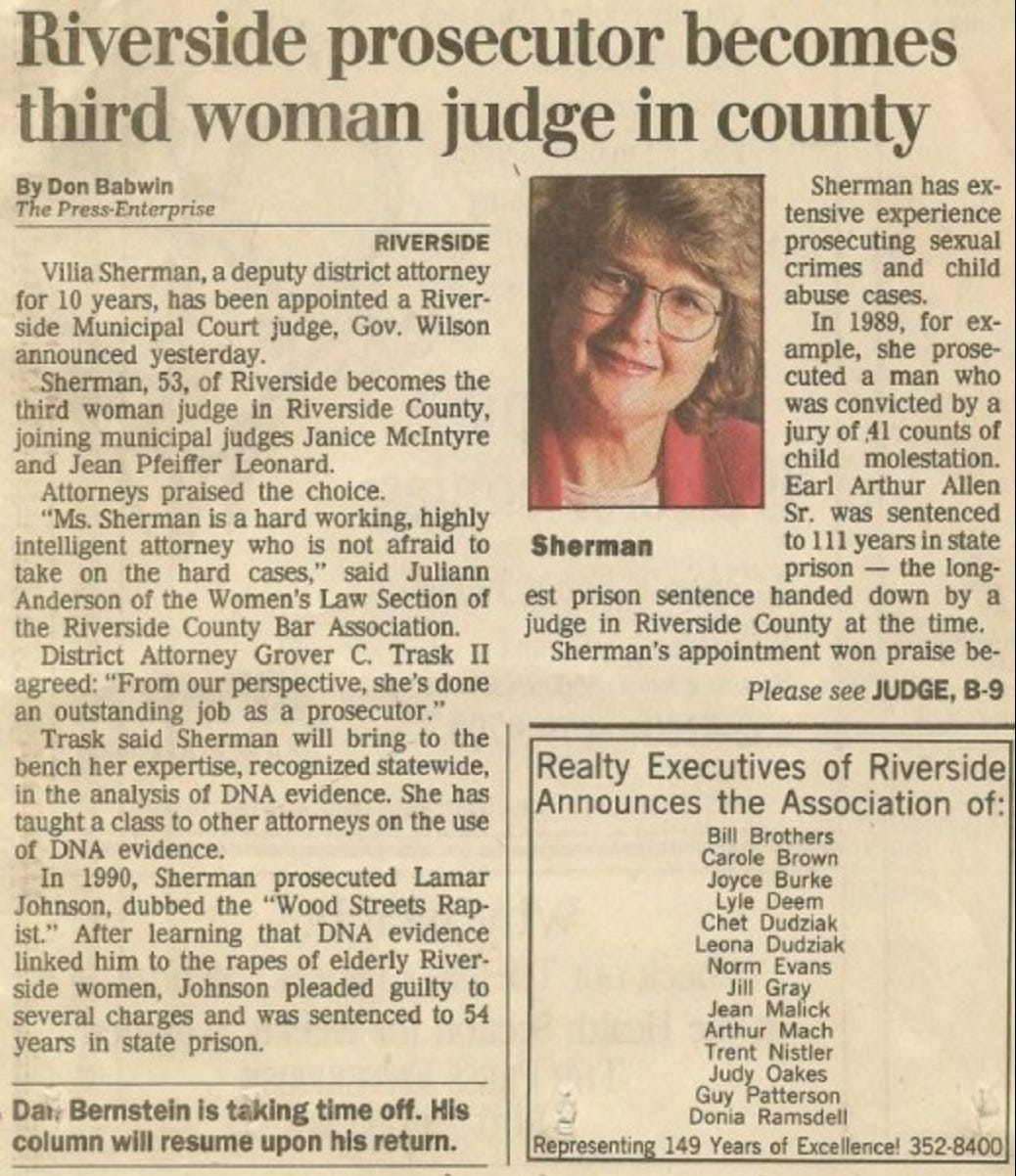
Then she met my dad and converted to Judaism, became a U.S. citizen, and wrote biology textbooks — mostly for him — before becoming so enamored with community activism that she enrolled in law school and graduated at the top of her class. She went on to prosecute sex crimes and child abuse cases as a deputy district attorney, and was ultimately appointed a municipal court judge. She continued to sit on the bench while going through chemo and radiation following her first breast cancer diagnosis at the age of 60.
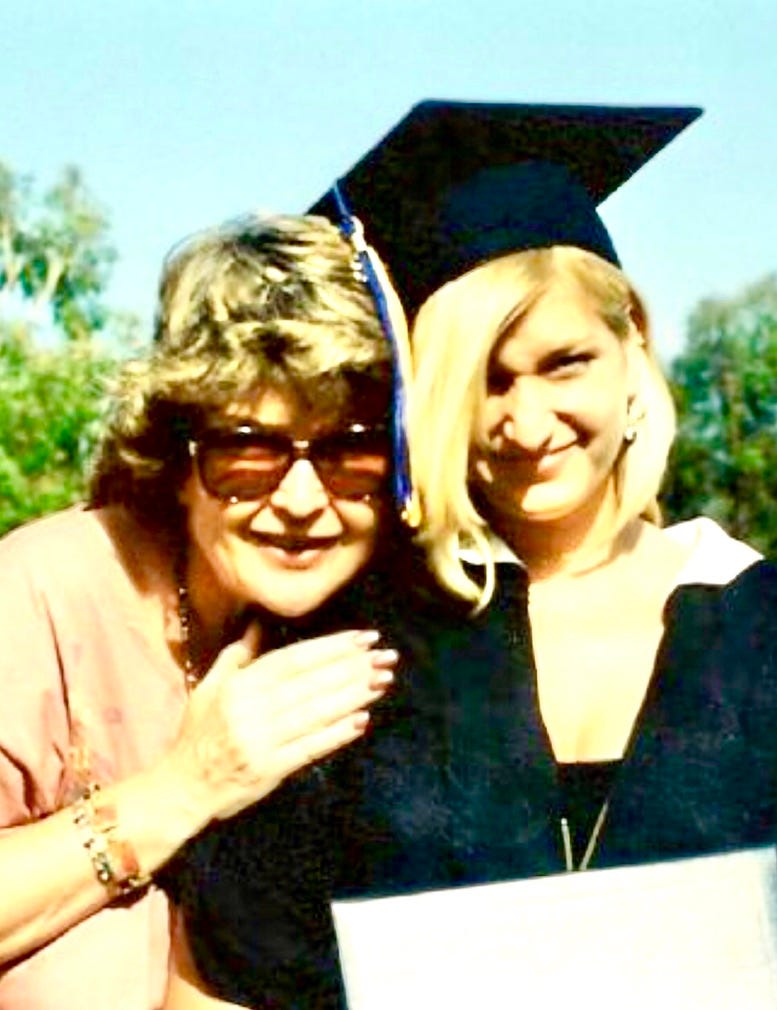
And those were just the professional highlights. I was born 13 months after my brother — Irish twins — and she was a mother like no other. She sewed our Halloween costumes and clothes (and her own), and planned and organized every family vacation, from Alaska to England to Australia. She oversaw the build of a house on Cape Cod (where she met my dad, and where our family summered for the first two decades of my life). She packed coolers full of fresh fruit and tuna sandwiches for every day on the beach, and cooked gourmet meals and threw marvelous parties featuring cuisine from her Cordon Bleu education. In many ways, she inspired my love of music and reading and writing and so much more.
Did she also do things that drove me crazy (kind of literally)? Hell yes. And I’ll probably be unpacking more of that in future posts.
But today, I want to focus on the fact that she did the best she could, as I believe most — not all, by any means, but most — parents do.


How Deep Is Your Love
My mother was an imperfect perfectionist. But the effort is all right there, in the photos capturing our closeness, the letters she saved (even the ones where she was awful), and especially the dreams she described in her writings — some achieved and others never fulfilled. She always said her roles in the courtroom were similar to performing onstage, which was something she loved in her youth and, I believe, wished she could have pursued. She also died before publishing the novels and memoirs she’d been quietly drafting.
In some ways I feel like I now have the chance to help her realize the latter. If only I can believe in myself, perhaps more than she believed in me … or, rather, in herself.
Because I can see things in her that she may not have — the adoration alongside the abrasiveness, the brilliance beyond the blind spots, the beauty beneath the blemishes — and I can hold all of it, without the fog of being the person living it (or at least not exactly?).
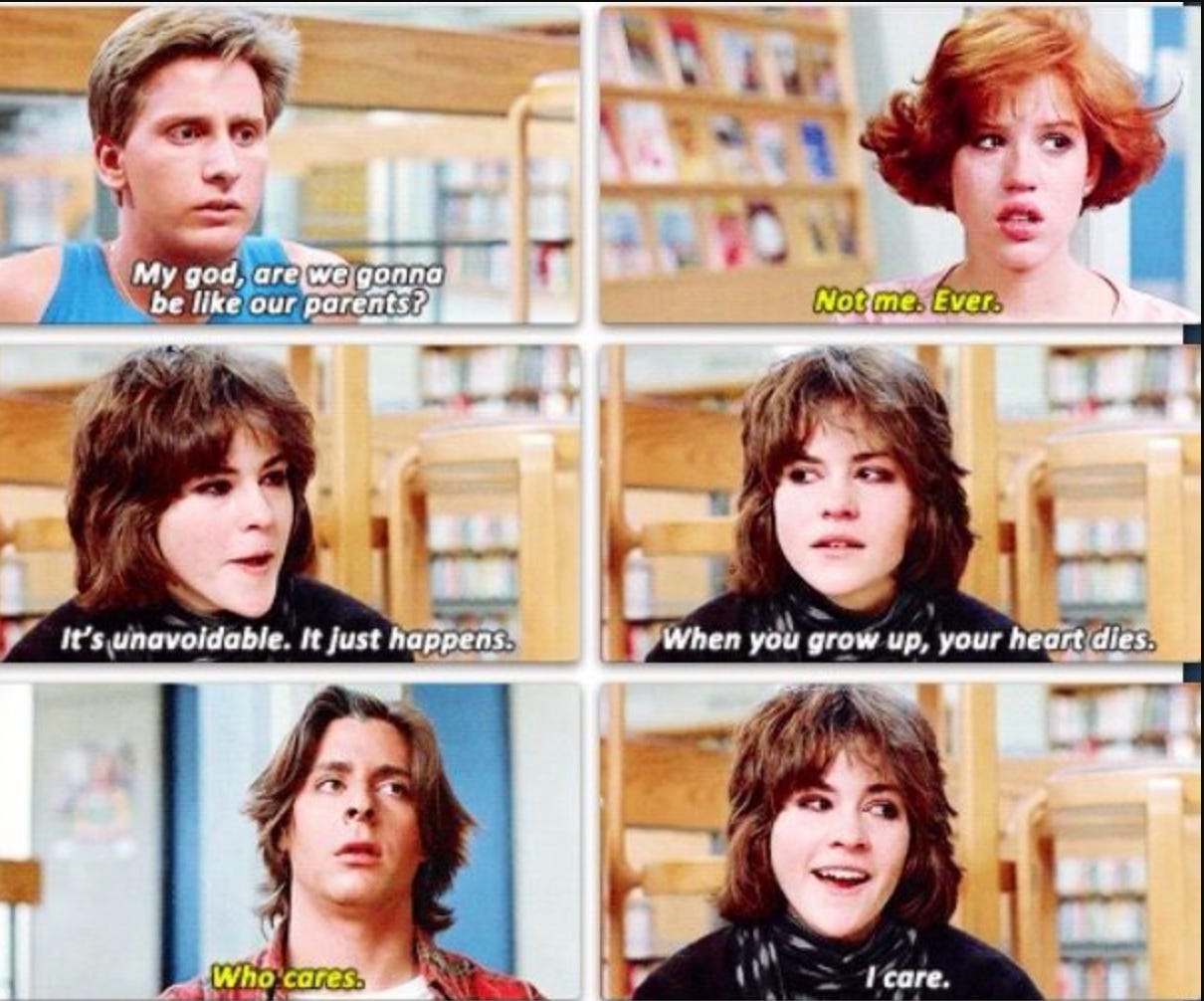
As the husband often reminds me when I focus too much on the negatives: We’re not our parents, because we’re aware enough to disrupt certain cycles. We know what not to do, based on the things that were so damaging and traumatic for us. And from my POV, we also know what to carry forward, based on the things they did right — including the moments they made us feel seen, heard, loved, complete … however rare.
So, maybe the question isn’t: Am I turning into my mother?
Maybe the question is: What parts of her do I want to keep?
And maybe, any time I cringe at becoming her, I need only remind myself that there’s as much to rescue as bury, so long as I keep digging for the good stuff.
It’s probably lurking just beneath the surface, after all.
"What parts of her do I want to keep?" That question is going to stay with me.
My mother is still here but I already see myself sorting through the same things. We used to tease that you couldn't compliment her on her shirt or she'd take it off and give it to you. Last month my daughter raided my closet, and when she came out I told her to keep it. It looked better on her anyway. Some things apparently skip nothing.
Oh I love this so much. And you. And YOU.